





Roughcast
Contents |
[edit] Introduction
Roughcast is a traditional type of render – an external surface application that has been used for centuries in Britain both for aesthetics and to provide protection against the weather, particularly in exposed and coastal areas.
[edit] Composition
Roughcast typically comprises a crushed aggregate of washed gravel (or stone chippings) and coarse sand, mixed with slaked lime. Variety can be imparted by using stones of varying colours. In recent times, cement is often added to the mix, either for economy or in the mistaken belief that a stronger surface finish will result.
In addition to climatic and aesthetic reasons, roughcast has also been used to conceal poor workmanship e.g unsatisfactory brickwork or rubblestone masonry. It was often used for this purpose on common buildings and outbuildings, particularly the panels of timber-framed buildings.
Roughcasting is also a convenient solution for curved walls, where the use of brickwork, blockwork or coursed stone would otherwise involve much higher labour costs and skilled workmanship.
Roughcast became a popular rendering technique between the 1890s and the 1930s as part of the Arts and Crafts movement which sought to revive traditional building processes as part and parcel of vernacular architecture. Today, it is more likely to be seen as a ‘home improvement’ surface on brick-faced terraced houses in urban areas. However, even this use is becoming less popular.
[edit] Application
In earlier times, the wall to be rough-casted was first coated with a 12-18mm layer of lime and sand. The rough cast was subsequently ‘thrown’ onto this using a trowel. Apart from the inclusion of cement, the modern variant of the technique may be applied mechanically, if not by trowel.
It is believed that application by throwing can be more durable than trowelling; this may be because as the roughcast is thrown against the wall with some force, it ends up better compacted and achieves better adherence to the wall as a result.
[edit] Roughcast vs pebbledash
Nowadays, builders frequently use the terms ‘roughcast’ and ‘pebble-dash’ synonymously, but there is a difference between the two. In roughcast, the stones are mixed with the mortar and then thrown onto the wall; the result is a uniform colour effect throughout that is said to have a visual softness.
On the other hand, pebbledash makes use of only small, washed pebbles but no lime: the mortar is thrown against the wall and the pebbles subsequently thrown in, allowing their subtle colouring to show through. The Arts and Crafts architect CFA Voysey was very keen on pebbledash, not just for aesthetic reasons, but also because it was cost-effective and durable.
These characteristics have led to pebbledash being used widely in post-war housing, often as a means of covering-up poor workmanship. It remains a popular building material in Scotland, where it has been common practice to incorporate beach shingle, which typically contains significant quantities of sea-shells.
More recently, pebbledash and roughcast have come into disrepute, although in many cases this is mostly due to their misapplication or inappropriate use. They are often criticised for being unsightly and non-breathable, as well as for failing to take account of the individual historic fabric of buildings. Pebbledash is even thought to reduce the value of a property by up to 5%.
[edit] Related articles on Designing Buildings Wiki
Featured articles
Check out some of the best features and news from Designing Buildings as well as key stories from around the web.
Building Regulations and Building Safety Act

CIOB publishes free advice for non-domestic clients.

Building Safety Newsletter from MHCLG.
An extraordinary record of steel engineering worldwide.

Households living near new pylons to save on bills.

ECA warns growth must not outpace grid capacity or skills.
The role of the client and decision making

CIOB response to built environment professions call for evidence.
Construction's sustainability reporting revolution
Tracking upfront embodied carbon with digital tools.
ECA welcomes procurement reforms

Public spending must back British jobs and skills.
Campaigning for Edinburgh: the Cockburn Association 1875-2049

The role of the civic voice in protecting character. Book review.

CIOB photography competition is open for entries.
ECA Edmundson apprentice of the year award

Finalists announced.
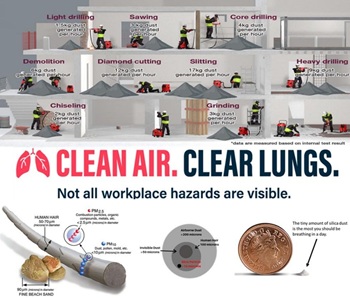
Major new study exposes serious knowledge gaps.